| 2007 Vintage Port Forecast |
| Written by Roy Hersh | |||||||||||||||||||||||||||||||||
| Saturday, 28 November 2009 00:00 | |||||||||||||||||||||||||||||||||
|
Mission accomplished. Six months and 350+ individual tasting notes later and my 2007 Vintage Port Forecast is complete. The report includes a comprehensive review that actually began in the Douro, with three visits to Portugal during 2007. Months of blind tastings commenced in Vila Nova de Gaia mid-May of this year, encompassing two trips and 25,000 miles to assess cask samples and “finished bottles” culminating with more than sixty distinct Vintage Ports evaluated. As much as this is fun, there is a lot of work involved and if you’ve ever tried more than a couple of cask samples at the same sitting, you’re certainly aware how difficult this can be on your palate. Ever try 16 at a time, twice in a day for days on end? Ouch! Not that I am complaining as I wouldn’t trade this experience for anything, but it is a palate punishing job and not for the uninitiated. Back in 2007, it was pretty obvious by the time the harvest rolled around that there was something truly special about the grapes picked. Having been involved in numerous harvests this decade, I can sense when the hype is overblown and simply wishful thinking for “the next great vintage.” In 2007 it was clear that everybody was seeing, tasting and picking grapes of extraordinary quality and phenolic ripeness. From watching the action at triage tables, treading in lagares and tasting grapes on the vines at several properties and discussing the quality of the grapes that autumn, there was a unique “energy” unlike any other Douro-based harvest I had been around. More on the growing conditions later in this report. HARVEST A PLENTY As consolidation within the Port trade continues, the latest cycle which began back in 2001 through acquisitions, (Barros, Burmester, Cálem, Cockburn, Croft, Delaforce, Kopke, Roriz and Sandeman as examples) I’ve noted interesting emerging trends. First and foremost is the continued Single Quinta Vintage Port movement where the difference between “general declarations” and that of the annual production of Vintage Ports by the Single Quinta (SQ) producers, is growing ever hazier. The question arises whether or not consumers understand this difference, and more so: are they willing to pay the loftier prices for the generally declared harvests that continue on average three times per decade? Or will Vintage Port prices ebb and flow with a particular year’s quality, as happens with wine regions such as Burgundy and Bordeaux? The jury remains undecided. Another exciting dynamic is shaping up as the result of consolidation. Instead of the shrinking of the Port trade resulting in the existence of far fewer Port companies, (as was the case during past cycles of consolidation throughout Port’s history) the past five years have seen a renaissance of sorts. Not only is the proliferation of Douro wine producers growing exponentially, but there are many growers turned producers of very solid “Port-folios.” According to the IVDP’s Louisa Fry who checked this for me earlier in the week, there are now 116 registered Port shippers and producers. Wow! The sheer number of declarations seems to prove this point. 2007 set a record for the largest number of declarations in the history of Vintage Port as we know it. So while “survival of the fittest” will always be the case in the Port industry, just like any business, the weak will perish and continue to be bought out by the larger or stronger Port shippers. Ironically, and in spite of this dynamic, a grass roots movement of new producers and winemakers moving to the Douro from other regions in Portugal and other countries, along with existing Duriense grape growers who are becoming Port producers for the first time - - it is impossible to ignore this transformation rolling downhill since the early part of this decade. There is one other fairly new development I am noticing and this was borne out by observing the 2007 Vintage Ports. Innovative new concepts are now reaching the marketplace and no, I am not talking about Pink and Rosé Port. For example, I can’t remember the last generally declared vintage where so many mainstream Port shippers simultaneously declared their Single Quinta Ports side-by-side with their “classic” Vintage Ports of the same year. Here are a few notable examples: Churchill, Cockburn, Poças, Ramos-Pinto, Tedo, Weise & Krohn – just to name a few. Additionally, there were several brand new Vintage Ports launched: Duorum and Quinta Dona Matilde come to mind, with their 2007 VPs and others by existing Port producers, such as the Quinta do Vesuvio “Capela” and Niepoort’s “Pisca.” These two new and exciting projects were launched with 2007 on the label – and -- both were also produced in the same year as their classic VP. I believe that these trendy advancements are making a bold statement (squarely in the face of an economic situation that usually thwarts risk taking) and whether or not it has anything to do with consolidation spurring on innovation, or not, is a matter of opinion. Food for thought and/or discussion. Nonetheless, this too will serve to blur the line of distinction between vintages being produced every year by SQVP producers and that of the generally declared, classic vintage Ports. Tradition has a funny way of remaining pertinent and I hope there is room for both and urge the Port wine trade and industry groups like the IVDP and even ViniPortugal to increase the focus on educating consumers about these differences and Port in general. GROWING CONDITIONS It is difficult at best, to provide insight into the weather and growing conditions of an entire harvest with a region as diverse as the Douro. There are 3 unique sub-regions that make up the Douro and two sides of the river with vineyards growing up along the banks on both sides. The expositions and differences in terroir within these three sub-regions are as enormous as the macro-climate conditions found in a specific vineyard or even parcel within the vineyard itself. Neither is checking a weather station in Régua or Pinhão or up in the Douro Superior, going to provide accuracy. For this facet of the 2007 report, I have had to gain insight from the people who were working and living there. We have to look back to the 4th quarter of 2006 to note there was a good deal of precipitation which helped the water tables in the Douro. Three of the first four months in 2007 were mostly dry and only had sporadic rainfall; February being the wet exception and generally warmer than usual for that specific month. Due to this weather, bud break took place early, in some areas of the region (mid-March) while others experienced it a week or two earlier (or later) depending on location and flowering took place nearly two months later, in mid-May. May was cloudy and with some rain, but moderate temperatures prevailed and this was not advantageous for the fruit set and potential yields were reduced. June saw a lot of rain in the middle of the month and presented potential problems with fungus. July also had rain mid-month and that brought on more serious concerns with fungus and some that left their vineyards untreated had serious mildew issues, while the leaf set on the vines was rampant due to all the water and nutrients in the schist. June and July had relatively cool temperatures too, but then came August. August was the turning point and what looked like it was going to be a later harvest (I was pleased with the dates chosen for our Port Harvest Tour) did not wind up that way. Half the normal average rainfall fell during the month of August. The temperatures started out much cooler than is typical of this crucial month, with cool nights providing excellent acidity levels and slowing down the maturation of the grape’s ripening. It did get warmer towards the end of the month and into the beginning of September. With grape skins already soft and full from the earlier rains, September was going to be pivotal. If it rained before the harvest, issues with oidium and other fungal problems could be serious, but with soft and plumped up skins, all could be lost. Fortunately it was a significantly dry month and very little rainfall took place and when it did, it was light and brief. Harvests took place under exceptional conditions and the Duriense were particularly thrilled. Unlike some prime wine regions in France, 2007 shaped up to be an exceptional growing season with just enough moisture/rainfall to provide great nutrition for the grapes and long hang times which worked in the favor of the natural phenolic ripening of the grapes. In Pinhão, considered the heart of the Douro, there was actually half as much rainfall in 2007 as measured against the average annual rainfall. IMPRESSIONS OF 2007 VINTAGE PORTS & WHEN TO DRINK THEM From all accounts 2007 was something very special. As I mentioned, when visiting the Douro during the harvest in 2007, the energy was palpable and virtually everyone we came in contact with, was glowing and chatting us up about the quality of the grapes. Admittedly, there is always some hype surrounding the vintage time, but in 2007, it just “felt” different. Later in this newsletter you will read the professional opinions of a dozen noted Port personalities and their views on the 2007 Ports overall. In 2008, when “unofficially” tasting some very early barrel samples and taking a premature glimpse at a number of 2007 VPs, I was somewhat confounded at that point, finding lots of “green” elements in several samples. The structure of the wines eluded me and all I could ascertain was the enormous juicy fruit-forward nature of the fledgling Ports, not too dissimilar to other years at that same point in time. Of course it was way too early to make any real judgments and beyond the “regulations” this is why decisions don’t take place until the following winter. In fact, the producers/shippers wait until January and/or February of the second year following a harvest in order to begin their serious evaluations of their Vintage Ports, to ascertain whether they have the right stuff. Having the opportunity to try some of the 2007 Vintage Ports on as many as 15 distinct occasions and having written specific tasting notes for each, overall, I have logged between 350-400 tasting notes since May, about 50 of which were not done blind and therefore, were not used for my report … except in two specific cases, which are clearly mentioned in the tasting notes that follow. After lots of consideration and in retrospect, I am still somewhat divided in my opinion of this vintage overall. There is no denying that there were many fantastic, well made vintage Ports in 2007. The upshot is that I found myself writing, “the greatest young ______ Port I have ever tasted” from a number of houses. With 2007, they seemed to raise the bar to a distinctly higher level than ever before. On the other hand, I believe that the percentage of truly great Vintage Ports is less than I would have expected from such an exalted vintage. I only rated ten of sixty three Vintage Ports with baseline scores over 94 points. Additionally, several of the historically most prestigious producers of Vintage Port made very solid but not outstanding Vintage Ports in 2007, most of which I have had enough times to make sure it was not bottle variation. Again, this is just one man’s opinion, and I realize this may not be the most popular one to put in writing. From 1991/1992 when I first started trying cask samples of Vintage Ports, and through 2003, I typically have found a larger percentage which deserved scores in the upper 90-point range. With 2007, I found so few at the very top … above 95 points, that I am a bit surprised when looking back at my own scores. I guess what I am trying to say is that although 2007 has a greater number of excellent (90-95 point) Ports; at the upper end, there are remarkably few that I found … say, in comparison to 2000 and/or 2003. What conclusion can I draw from this information? It possibly shows that I prefer the Vintage Ports from classic hot years like 2000 and 2003, even better. I am not the first to admit having preferences in wine and certainly with Port. Although I love “harmonious” characteristics and “elegance” in Port -- and 2007 certainly epitomizes both; I probably tend to buy Vintage Ports that are more about power, concentration and big-boned tannins. Fonseca 1985 and 2000 come to mind, so does Graham’s 1994 and 2003, Taylor’s 1992 and 1994, Niepoort 1997 and 2000, Vesuvio 1994 and 2000, Quinta do Portal in 2000 and 2003 and I can go on and on. Only some of these aforementioned beauties come from hot growing seasons. That said, and to be fair -- when evaluating Ports blind for these annual Forecasts, I tend to divorce my own stylistic preferences and report what I taste. I do believe after 25+ years as a Port lover, having tasted many thousands of bottles of Port, I can keep an open mind when evaluating them and can certainly rate Ports that do not fit the profile I tend to like most, wearing a more objective hat in that regard. I learned that skill from putting together wine lists, where I would avoid my own personal preferences in order to place wines on lists I was creating, knowing they’d be better appreciated by the consumer. Taking a more macro view of the 2007 vintage, I believe it is a very solid vintage with a diversity of Ports at all qualitative levels. Improvements in the vineyards, greater winemaking capabilities, deft use of robotics and foot treading all have had a much greater impact as well as the cooler and very balanced growing season and phenolic ripeness levels reached – make 2007 standout in modern times. There are those that have mentioned that the Port trade is intentionally making Vintage Port which won’t age as long and to this I say, “rubbish.” Although I firmly believe that today’s Vintage Ports are being made in a more-accessible-at-an-earlier-stage style than the VPs from even two or three decades ago; the 2007s exhibit the ability to age beautifully as the group overall presents phenomenal balance, with excellent structural components along with extracted, rich and lush fruit. To repeat, the 2007s as a whole, will age brilliantly. Moreover, most will be quite approachable early as well, which is a different dynamic. In most cases, 2007s will be able to age for decades, but there’s a softer side to 2007s than 2003, just using one example. In this way, I liken the 2007s to 1994 at the very same stage. Fruit forward and some in which the underlying structure is subverted to the opulent fruity character. The proof is in the tasting. BUYING ADVICE The question is simple, do you want to own Ports which have been in your cellar since they were first released or would you rather gamble 5-30+ years down the road that the bottles had been stored well prior to your purchase? Were they shipped during times when temperatures were within reason? I prefer to know that Ports have been in my own cellar and that I can control the conditions under which the VPs mature. Maybe if I lived in the UK where cellars were cooler and damper and there was a greater understanding of Port, I’d have a different view. But in the USA in particular, where it is not hard to occasionally find cooked wines and Port at auction, or less than stellar bottles with signs of previous leakage etc., no thanks, buying on release is the way to go. Given that yields were down significantly in 2007 and the quantities produced by the majority of shippers and producers was smallish, the likelihood of pricing going up in years to come, is something a consumer must not overlook. The decision of whether to buy now, given the economic crisis is certainly one that will need to be considered by individuals too. But this is the first time since I have been buying Port where pricing did not increase from the previous vintage. In the vast majority of cases, pricing from Port shipper/producer into the USA is at or below 2003 levels. One may argue that 2003 was overpriced, but regardless, 2007s did not increase and I was pleased when seeing that. Unlike the UK where there are only two tiers in which to control pricing, we in the USA and Canada (and some European countries) have less advantageous systems in place. On the FTLOP Forum, a discussion point turned to: “Why shouldn’t I buy a 1985 Vintage Port from a producer who is charging the same price for their 2007?” Although this is not a new thought, I would never argue with someone looking to back fill with older vintages. I also understand that people who are middle-aged or in their later years (whether that is 40, 50 or even 80) may not want to have to wait to have their Vintage Ports mature for decades in cellar. To those individuals I would recommend they buy older Vintage Ports instead of 2007. However, it should be duly noted that unlike some hot, young vintages … the Ports from 2007 are extremely approachable and easy to enjoy now, with softer underbellies and tannins more cloaked in fruit. One thing I have noticed and heard too. In the USA, there were a very small number of retailers who put out futures pricing (in the USA more aptly known as pre-release pricing) compared to previous campaigns from the past 15-20 years. I am sure this is directly tied to the quantities of current stock they still have on the shelf and in their warehouses of 1997, 2000, 2003 VPs. In the UK, according to several sources, the early tranches of 2007 Vintage Ports have moved well, but we’re also talking about smaller allocations than in past campaigns. So it really boils down to personal preference. My last word harkens back to my initial thought. Do you want to have control over the conditions in which your Port wines mature? For me, that is the deciding factor, not whether I can save $5 or $10 per bottle, by buying now or in 20 years. I am sure the economists in the group will have their own opinions, using the value of money scales and justifying their expense or lack thereof, based on what they believe the relative merits of tying up capital, but the decision is much easier for me. Do I like the 2007 Vintage Ports enough to buy in or not? The quality is there, the rest you’ll have to decide for yourself. With the tasting notes that follow, I hope to guide you towards a 2007 Port that you will enjoy.
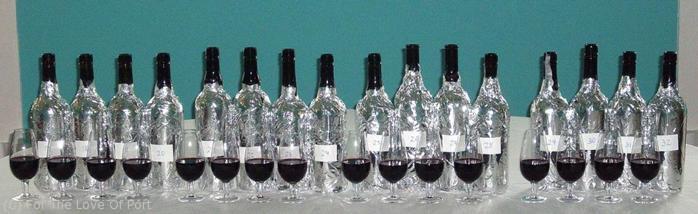
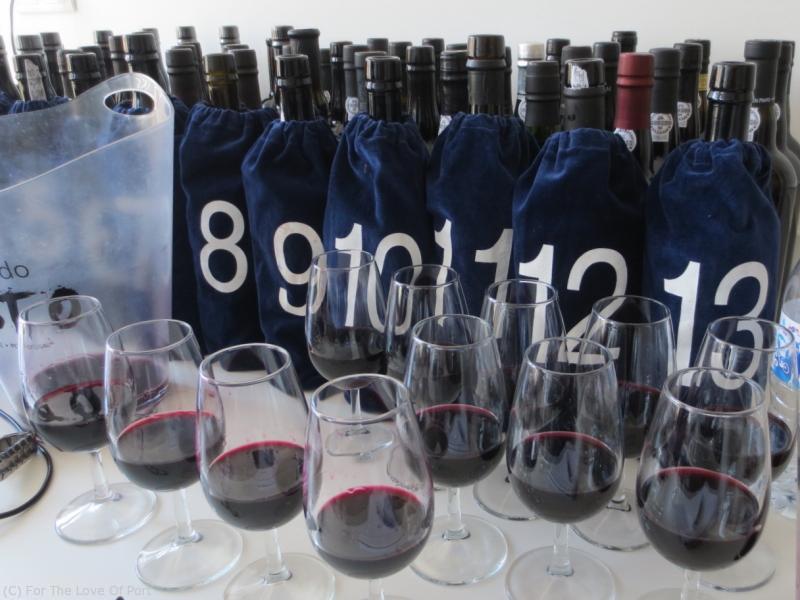
TASTING REGIMEN In May, I had a great time on the Fortification Tour and was also looking forward to the following week. I had leased a tasting room (shown in the pictures in this article) in Vila Nova de Gaia, which would provide me with privacy, 24 hour access, great lighting and a staff that would wrap and number bottles, provide clean glassware daily and remove empties. This made it easy to taste VPs over the course of several days, blind of course, without any noise (beyond my Fado music playing on my computer) or outside distractions. It made staying intensely focused on the Ports at hand, very easy for me. The week in which I was sequestered in this room, provided the perfect environment for this undertaking and allowed the Port trade to easily ship samples directly, rather than trying to get them to my home in the USA, which is always a hardship and real pain in the neck for all involved. While in Gaia, there were 49 samples sent (most of which had sent two bottles) and these were tasted in daily flights of 16, 16 and 17. All samples were tasted at least four times over several days, with a separate tasting note entered on my computer including the organoleptic characteristics and other details, each time I tasted a Port. Some Ports required further sampling, while others remained static after a few days and did not warrant further evaluation. By the end of the week, I had a very clear picture of how these 49 Vintage Ports “behaved” and I typically spent at least one hour with every sample … as a minimum. The process continued. I hand carried back all that I could possibly carry in my wine luggage, boxes taped together and buried within my clothing in my checked baggage. Thirty four bottles in all, none broken and much to the dismay of the US Customs agent I faced upon arriving back on American soil. I was prepared to “go the distance” to ensure my 2007 samples were to make it back home safely … and fortunately, succeeded in this mission.
I removed all of the capsules with identifying marks and set the bottles on a shelf in my wine cellar where they rested for a couple of weeks. My wife Dorene deserves lots of credit for her assistance, mixing up the placements, then randomly bagging Ports 1-20 and hid all the rest out of sight. I told her the night before how many I would be tasting next and she would set them out in my tasting room below grade and quite cool. I spent at least three days with all bottles and with over 90% of these samples, four days. My tasting procedures remained constant between the bottles I had in Gaia and the tastings at home. I also received a bunch more samples through importers in the USA and “other methods” in order to obtain a broader sampling and my wife then mixed these in with other flights which typically numbered three or four and occasionally six bottles at a time. There was one flight of nine bottles that were shared blind (when Andy Velebil and David Spriggs came up for a three day weekend) and my Port loving FTLOP-neighbor Glenn Elliott joined us. Glenn also sat in on a bunch of other flights, eager to learn what it was like to blind taste cask samples. I am copying this paragraph from the FTLOP Forum:
For the original 34 samples, the majority had now been tasted seven to ten times. This process went on in the second half of June, all of July and August (except during a few brief hot days) and upon returning from Portugal in October; and finally, three last bottles in November (that are not part of the initial tasting notes) but are now in the new TNDB. Additionally, there were two bottles which I tried during my visit to Portugal which only received a “snapshot view” … which I did include in my report … but those are the only two examples, (clearly noted in the TNs) of Port not tasted blind. Now some final thoughts about “the process” and you. Please note that my ratings are just that … the opinion of one man. Whether readers agree or disagree with my assessment -- that is out of my control. I always strongly recommend consumers read as many reports and data points from as many different critics and trusted palates that they can find before making a “buying decision.” Whenever feasible, taste the Ports for yourself before making up your mind. If that is just NOT possible ... use a critic whose palate you trust, try to learn how they go about their tasting process and make sure to be able to calibrate your palate against theirs. And last but truly not least: try to get a feel from the content within tasting notes, beyond the immediate score, because that should provide you with a much greater understanding of what a critic has in mind (or mouth as the case may be).
In all, sixty three bottles of 2007 Vintage Ports were evaluated. Here now, the tasting notes: TASTING NOTES Here are some of my other recent vintage evaluations in case you would like to peruse them: 2000: http://www.fortheloveofport.com/vintage-port-forecasts/2000-vintage-port-forecast
2007 VINTAGE PORT TASTING NOTES
2007 Andresen Vintage Port – Cask sample. This is a producer that I’ve never visited, but need to correct that oversight on one of our upcoming tours to Northern Portugal. A classy aromatic profile containing scents of anise and spearmint, sweet grenadine and boysenberry fruit with spicy white pepper to add greater character to the nose. Although easy to enjoy now with prominent blackberry and generous grenadine flavors delivering the one two punch, it has focused acidity and along with chewy, somewhat aggressive tannins this Andresen VP resonates balance. Elegant in the middle and long in the aftertaste, the spirit needs to calm down a bit. Otherwise, it is one fine young Port. The aging potential provides for a minimum of thirty years for 2007 Andresen; a name that hopefully will become better known in American Port circles. 92-94+ points 8/9/09 [$ Find on Winesearcher.com $] 2007 Barros Vintage Port – Cask sample. After the incredible showing of the “off vintage” 2005 Barros VP as a just finished bottle, (95 points, the highest score I gave for any 2005 VP) I had very high hopes for the 2007 too. How did expectations meet the results from blind tasting? This was the 32nd Vintage Port I tasted, the last of the 2nd grouping of 16. The nose was permeated by compelling aromas of raisins, Rainier cherries and red currants along with significant spirit. Over the next two days some Kirsch and prune crept into the mix. Actually, this was an impressively focused bouquet and a great start. On the palate, full and with fine grape purity, raisins, black cherry, leather and a hot streak that did not quit. Also the acidity was not enough to provide “cut” and the sweetness of the fruit seemed out of balance, if not over-the-top. The tannins were fine grained and round, after a massive tannic impression the first day (only). But it was the heat which drew away attention from the middle and marred the length of the finish and overall pleasure. Will it integrate with age? I believe “yes” but time will tell. Let this settle down for the first five years and then revisit, with aging potential between 18-24 years. I’ll reserve judgment beyond stating that the 2005 VP was a significantly more beautiful infant and the 2007 will require more patience while it integrates. 87-89+ points 5/14/09 [$ Find on Winesearcher.com $]
2007 Cálem Vintage Port – Cask sample. Another Port shipper from the Sogevinus stable, Cálem sports a new Port lodge in Vila Nova de Gaia. The 2007 started off “tanky” and lackluster, but evolved over a few days and gained some aromatic spicy notes, with a briary blueberry and plum nature, along with a lifted violet accent and a bit of alcohol as well. Infused flavors of ripe, chewy plum and pomegranate juice are generously fruited and tend towards the sweeter side of the spectrum. Very approachable, smooth and rich, luxurious in the mouth from day one and adorned with vivacious acidity. A bit simple and although tasty, the finish seems a bit clipped too. Drink the Cálem young while you wait for your other 2007s to reach maturity; at best between 2018 and 2024. 87-89+ points 5/16/09 [$ Find on Winesearcher.com $]
2007 Churchill’s Quinta da Gricha Vintage Port – Cask sample. Brimming with a brooding complex earthy nose featuring fresh figs, grenadine then accented by black pepper and a hint of green. Medium-full bodied with a plush texture and mouthfilling, bright acidity. Off dry stylistically and easy to approach, with undeniable elegance; flavors of blackberry, cassis and chocolate and a slight stemmy character on the back end. Solid balance, a nicely nuanced mid-section and tannins initially subordinated by the fruit and showed up two days later, ripe and round to suggest fine aging potential. Will drink best at 20-26 years of age. A very enjoyable Vintage Port from Churchill’s oldest Single Quinta that gets too little recognition. 91-93+ points 8/12/09 [$ Find on Winesearcher.com $]
2007 Cockburn’s Quinta dos Canais Vintage Port – Cask sample. As many of you are aware, Cockburn’s is now part of the Symington Family Estates portfolio. Miguel Corte-Real made this Port using 50% Touriga Franca Grapes and 50% Touriga Nacional grapes from the famous Canais property. Using just two grapes can be limiting, but here it seems to have worked beautifully. The aromatics are profound, revealing a multifaceted bouquet of rose petal and violet fragrances along with spicy cinnamon, blackcurrants, and a backdrop of mint leaf and spirit. It was a pleasure to keep my nose in this glass of VP. The palate was equal to the task with concentrated flavors of raspberry liqueur and damson plum which melded beautifully in this medium-full bodied and smooth elixir. This is a complete Canais, with the solid structure providing excellent aging potential and a fruit filled finish, racy and long. Drink while young, during its teenage years or as far out as 2040. Cockburn’s SQVP has the stuffing to go the distance. 92-94+ points 5/14/09 [$ Find on Winesearcher.com $]
2007 Delaforce Vintage Port – Cask sample. A weird nose, “tanky” initially with prune, green herbal and stalky notes, stewed figs and a reductive quality. Exhibiting medium weight, round and mouth coating, while easy and approachable. Better in the mouth than the nose with lovely ripe plums, boysenberry and a dose of spirituous character early on that hopefully will integrate with more time in the bottle. Medium to dry style from stem to stern. Tasted during four distinct sessions over a two day period this did not seem to get any better and stayed fairly static, except for the modest tannins that gained further grip. It will drink best, now through 2025. 84-86+ points 5/12/09 [$ Find on Winesearcher.com $] 2007 Duorum Vintage Port – Cask sample. João Portugal Ramos of Gestvinus fame, is best known for his wines from the Alentejo region of Portugal, in addition to other small wine regions like the Dão. But he wanted to spread his wings and buy property and have a presence with Port and Douro wine. So he chose a brilliant partner and in January 2007, José Maria Soares Franco, left Ferreira (owned by Sogrape) where he had been the head winemaker for 28 years. Having been responsible for many projects including Barca Velha and others like Quinta da Leda, Callabriga and several others in the Ferreirinha stable, this is the first Dourum Vintage Port. Given the class of this young Port it is truly hard to believe this is a debut effort for this team. Explosive notes of lavender and violets are penetrating on the proboscis and overlaid by an infusion of blueberry, and fig aromas. Due to the huge grippy fine grained tannins at the onset, this was a bit rough on the palate, but morphed nicely the following three days to provide a far more elegant impression and the tannins seemed to integrate seamlessly and rather quickly too. Fine racy flavors of fresh fig, ripe purple plums and a gentle sensation of spirit evolved. Lush and complex, this Port will drink well early on and provide its greatest pleasure between three and four decades out. Blind tasted by a panel of four over the course of a very long weekend, including eight other “top” Vintage Ports, with all panelists finding this as one of the better wines of the flight. 93-95+ points 7/20/09 [$ Find on Winesearcher.com $] 2007 Dow Vintage Port – (“Finished” bottle) Offering a spicy panoply of redcurrants, blueberry syrup, black pepper and cinnamon baked apple notes that evolved with every sniff. Brawny, fleshy black plum and ripe purple fruits are plush in the mouth, distinctly concentrated and somewhat sweeter than I typically find young Dow. There’s plenty of crisp acidity and the intricately layered mid-palate is laden with promise. Deceptively firm, ultra-smooth tannins take charge just before swallowing and the off-dry finish possesses stunning length. Bold flavored and delicious, this distinguished Dow is my favorite of the Symington’s 2007’s and there’s little doubt this will be drinking beautifully early in its life and through 2050+. The first bottle evaluated in mid-May was restrained, but three months in bottle has helped tremendously. 6,200 cases produced (12 x 750s). A stellar Vintage Port from this fine shipper. 95-97+ points 7/10/09 [$ Find on Winesearcher.com $]
2007 Magalhães Vintage Port – Cask sample. From the Carlos Magalhães family comes this generous Vintage Port. I first evaluated their 2000 Vintage Port and have featured every subsequent vintage. The grapes come from the Roncão Valley and the estate of Quinta do Silval where Teresa Pinto, the talented Portmaker, is honing her craft. In past vintages she has used just two grapes with the majority comprising Touriga Nacional and also about 20-30% Touriga Franca. Extraordinary aromatics featuring an enchanting and spicy perfumed nose of cinnamon, sweet maple, boysenberry and tar notes with a dollop of leather for good measure. Although the flavor profile is very good, the textural pleasure derived from velvety smooth fruit and dense, non-aggressive tannins, make this so much fun to drink now. Moreover, there is plenty of underlying structure and the tannins here show great promise for future longevity. In fact, the Magalhães needs a few years in the cellar and will drink very well through 2040, with ease. A beautifully balanced and refined 2007 Vintage Port by this up and coming producer. 92-94+ points 7/4/09 [$ Find on Winesearcher.com $]
2007 Niepoort Pisca Vintage Port – Cask sample. Pisca is not new, per se. Dirk’s grandfather vinified grapes from this vineyard nearly 70 years ago, and the grapes have been part of the Niepoort Port wines ever since. In 2003, Dirk took control of the Pisca Vineyard and started the difficult task of renovating Pisca, although it is not officially registered as a Single Quinta. The small vineyard’s insanely low yields needed lots of work. In a throwback to his grandfather’s time, Niepoort has decided to make the 2007 Pisca by pushing the envelope and extending the VP’s wood aging an extra six months or longer. The aging will take place in pipas (550-600 liter casks, not used for Vintage Port) rather than the norm, which is in a more reductive state when matured in large toneis or balseiros (huge oak casks) as his grandfather had done many years ago. The vineyard is healthier today with greater yields making for better balanced grapes. The 2007 Pisca offers generous aromas of plum, ripe raspberry, minerality and an earthy note of kalamata along with great purity of grape. There is a harmony to this Port and a richness which I liked very much, although admittedly, I found greater freshness in the regular Niepoort bottling. Here I found the tannins were more refined and round, yet still with innate grip. The palate is treated to waves of flavor and even blind, I noted that Port #40 seems like it was from the identical producer as #39 (later revealed to be Niepoort’s regular bottling). This second bottle showed even better for the extra month it had to settle down. I enjoyed the density and harmony of the fruit, acidity and tannins. The finish was exceptional and overall balance, the trademark. The Pisca should age beautifully for three decades or more. A very fine inaugural vintage for this throwback. 93-95+ points 6/29/09 [$ Find on Winesearcher.com $]
2007 Osborne Vintage Port – Cask sample. In my Port tasting experience, admittedly I have had very few data points from this Port shipper. I remember how well the 2003 Vintage Port showed at a similar stage. The longer the bottle of 2007 was open or the Port sat in glass, the more focused and layered the nose appeared to become. Awesome aromatics of Rainier cherry, black licorice, cocoa powder and a not so subtle whiff of aguardente. Austere in the early goings, the flavors really emerged on the 2nd day to reveal fresh figs, smoky prunes and overtly sweet plums framed by powerful, puckering tannins and ample acidity. Big, bright and chewy, there is a youthful hot streak which I could not ignore, although by day four it integrated better, but was still obvious. Hopefully with a few years to meld, the heat won’t stand out and I look forward to revisit this Osborne during the upcoming decade. It should drink well from teenage years through 2035. 92-94+ points 9/4/09 [$ Find on Winesearcher.com $] 2007 Pintas Vintage Port – Cask sample. Wine & Soul’s charismatic husband/wife winemaking team have been making a splash with their fine table wines in recent years. The nose of this wine is similar to that of the Quinta do Passadouro in that it’s noted for being “tanky” and high-toned, before the fruit elements are accounted for, with blueberry and black raspberry aromas. The palate performs perfectly well, adorned by layers of black raspberry and juicy cherry fruit which is rich, ripe and ultra-smooth with a silken chocolate decadence of good length. In a later example of this Port it had improved rather dramatically during a sampling on our Harvest Tour, but that doesn’t figure into this note or score. Best on the 3rd of 4 tastings, this showed nicely except for the nose which was still wound too tight from cask. A mid-term ager this will deliver the goods early on and through 2026. 88-90+ points 5/14/09 [$ Find on Winesearcher.com $] 2007 Poças’ Quinta de Santa Barbara Vintage Port – Cask sample. What a wonderful surprise as the 2nd and 3rd day this opened to become an absolute joy ride of a Port. I love when this happens and it is the beauty of blind tasting, no possibility for label bias and discoveries like this unfold. More importantly, this is a perfect example of why “snapshot” views of Vintage Port don’t work; as if I had only tasted this on day one, I’d have a very skewed – wrong impression. Possessing an expansive nose of complex divergent components of strawberry scents along with in-yer-face black pepper and accented by fennel, eucalyptus and esteva. In the mouth this delivered a myriad of sumptuous flavors from a rather ripe and brambly blackberry and dark cherry pie, some pure grape extract, loads of freshly cracked black pepper in a viscous and heavy weight of a Port with a delicious and enduring finish. If someone had told me this was Quinta do Vesuvio, I’d have believed them in a heartbeat. Dense, deftly balanced and stuffed in the mid-palate, the backbone of racy tannins is nothing short of massive. This is one to seek out and could be one of the finer bargains of the vintage. A thrilling young Single Quinta VP by Poças and now I will put Santa Barbara on my list of “must visit Quintas.” Fun to sip now for sure, however this will age beautifully for three to four decades. 93-95+ points 5/14/09 [$ Find on Winesearcher.com $] 2007 Poças Vintage Port – Cask sample. Talk about going out on a limb? Who is going to believe me without tasting this for themselves? I tasted this four times over three days and must say, it was something pretty special and my notes after day one, were very consistent. I’m not too surprised that it was “revealed” to be Poças as I have seen some very significant progress from this house over the past several years. Now I am champing at the bit to read what other critics have said about these two Pocas Vintage Ports; although not until AFTER my report is published. Exciting and sexy spicy nose with violets, anise, graham cracker, blueberry and tell tale black pepper which leaps from the glass. Gorgeously perfumed! The palate is every bit as good too, densely packed with purple and black fruit, along with that black pepper again and milk chocolate, both of which are part of the elongated and thrilling aftertaste. I must say there was a bit of spirit on the finish too. There’s this palpable nervous tension in this VP which provides a clue that this may be even better in a few years. Massive tannins result in teeth coating-tongue torturing astringency which some may not like. It is certainly not for the meek, but there’s plenty of fruit to sustain the core. Delivering complexity in spades … already. Blind, I thought this would reveal as the Taylor Fladgate. The only issue which manifested is the youthful heat which stood out on the finish, costing an extra point from being added on. When the aguardente integrates better, there’s no doubt this will be even more stunning. Grab the Poças, before others catch on! 95-97+ points 5/14/09 [$ Find on Winesearcher.com $] 2007 Quarles Harris Vintage Port – Cask sample. The least well-known book in the Symington’s library, and a rarely seen entry on collector’s shelves. Why is that? I would be guessing, but maybe because of how little is produced for the entire world. The 2007 version is a solidly vinified VP which is deserving of some attention, but there are only 1,000 cases (x 12 750s) for the whole world, and of course, it won’t all be released now. The story begins with a pretty perfumed nose of fresh carnations, mocha, boysenberry and cassis with a dollop of spirit character. Generous and scintillating, the second chapter reveals a mouthfilling, concentrated berry burst of boysenberry and sweet grenadine syrup flavors that wind up being swallowed along with some fresh mint, dark chocolate nuances and … a bit of heat again. All of this is delivered in a compact package neatly wrapped in tannins that show refinement and power at the same time, along with bright acid. The ending is poignant and long with some elegant chocolate that lingers after the last page is turned. Drink early but those fortunate enough to find some would be well-advised to cellar this for 25 years. 92-94+ points 5/14/09 [$ Find on Winesearcher.com $] 2007 Quevedo Port Vintage Port – Cask sample. For those that do not ever visit the FTLOP Forum and rarely read their newsletters, the name Quevedo might still be new. For the rest of the Port loving world (especially in the EU) I believe that although not yet a household name, Quevedo, is certainly a name recognized by many. The 2007 Quevedo delivers fresh floral fragrances, Asian spice, blueberry, ripe blackberry and a fun mocha/espresso note with great intensity. This is the story of a fairly new family-owned and operated grower/producer making old-school style Vintage Port and hitting a triple in its first at bat in the big leagues. Claudia Quevedo is the very talented young wine and Port maker behind the scenes, while her globetrotting brother, social-(media)-butterfly Oscar, is the face of the winery making a big splash internationally this year. The dark flavors of cassis and blackberries are supported by laser focused acidity and wonderfully ripe and round tannins and the ultra-smooth velvet-like presence is something to behold. This is a power packed Port and exhibits a well-nuanced middle and a great long finish that leaves a lasting impression. The 2007 Quevedo marks a line in the sand, to say “we’ve arrived” and can make as good a Port as anybody. Drink now through 2040. A great effort by the new kids on the block. 93-95+ points 5/16/09 [$ Find on Winesearcher.com $]
2007 Quinta Dona Matilde Vintage Port – Cask sample. A few years ago when Sogevinus purchased the Barros company from the renowned Portuguese family, this quinta was originally part of the sales agreement. Recently however, Manuel Angelo Barros, the Managing Director and his family made sure to repurchase ownership of their prized Quinta Dona Matilde property which maintains nearly 30 hectares of the 98 total, planted to grape. They used to sell their Port grapes to Taylor but with the 2007 vintage, they’ve produced their own Single Quinta Vintage Port and DOC Douro wine too. I am pleased to be able to provide you with a rare (English language) tasting note on this particular SQVP. Evaluated over the course of four days once the bottle had a chance to settle down. From the briary aromatic nose melds vibrant lavender, plums, brambly black fruits and a captivating herbal and esteva dynamic; adding character. This old-school seductive Port has its deep and full-bodied, earthy, Kirsch, boysenberry and licorice flavors framed by impeccably fine grained tannins that gain grip late. The multidimensional finish is as delicious as it is persistent. Another finely tuned debut offering in 2007, with the requisite structure to carry this the distance for 3+ decades. I look forward to trying many more vintages of Port from this Barros owned Single Quinta. 91-93+ points 9/4/09 [$ Find on Winesearcher.com $]
2007 Quinta do Noval Silval Vintage Port – Cask sample. What a brilliant way to start my morning, the first of four days evaluating these next three 2007s. A unique profile with scents of sour cherry, graham cracker, briary boysenberry. The next day added fresh cut geraniums and white pepper to the aromatics. Pretty perfume all in all. Dense, concentrated and ripe primary cherry flavor is so luxuriously smooth, with a showy mid-palate featuring a peppery flair. Sweet, sumptuous and mouthfilling fruit with great purity, zesty acidity and powerful tannins, drying but not grippy. Sensuous aftertaste that keeps on going. I can’t remember a better Silval bottling than this 2007. I can only imagine how great this would be if properly decanted. Revealed as Silval, this is going to provide extraordinary value for money given the quality and the ability to age for at least three decades. 93-95+ points 6/9/09 [$ Find on Winesearcher.com $] 2007 Quinta do Noval Vintage Port – Cask sample. Super extracted ink which absolutely epitomizes “blackstrap.” Upon pulling the cork on day 1, this already presented as a benchmark Port for the 2007 vintage. It stood out like Ali in his prime with the same pound for pound impact. The purity of the aromatics is sumptuous, with briary blackberry intertwined with sweet blueberry jam and fresh cut lavender, accentuated by mocha. It represents the essence of Noval at its best: monumental in its sheer depth, muscular and concentrated, yet balanced by extraordinary acidity and tannins. It avoids jammy, remains fresh and unctuous throughout, with waves of ripe black and purple fruits. The tannins? Tame early on and then the lion awakens. Not astringent, just aggressive … my tongue, cheeks and lips were literally left numb. A remarkably complex middle leads to a highly nuanced finish and it’s the first time I’ve ever used the descriptor “peach” for a purple-plush-Port. I can't wait to see what this becomes down the road a couple or three decades when it will resemble a young teenager. In reality, young vintage Port does not get much better than this, and when it does, from my palate’s preference point, it usually requires a hot vintage like 2003 to achieve that. In a vintage packed with numerous standouts, the 2007 Quinta do Noval was the most complete Vintage Port of all. The question begs asking, what would the 2007 Noval Nacional have been like? 97-99+ points 6/9/09 [$ Find on Winesearcher.com $]
2007 Quinta de Valle Longo Vintage Port – Cask sample. Having first reviewed this SQVP with their 2003 VP, a smallish property which is part of the Vista Alegre group, this is just the 2nd time they’ve vinified a Port during a generally declared vintage year. The Valle Longo vines average approximately 20-22 years of age and all grapes are food trodden in lagares. A fine Vintage Port, the nose exhibits fragrant huckleberry, black plums along with vanilla extract and mocha notes. I enjoyed the palate quite a bit as it provided velvety smooth textural pleasure and the fruit was in synch, offering up layers of cherry, chocolate and raisin flavors that were approachable and refined. Lots of crisp acidity and round, ripe tannins to provide the age worthiness. I don’t believe Valle Longo is available in the USA at this time. Drink early on or through 2032. 90-92+ points 7/4/09 [$ Find on Winesearcher.com $] 2007 Quinta do Tedo Sevedra Vintage Port – Cask sample. I first encountered Sevedra’s Vintage Port with the 2003 vintage and that same year visited the Tedo property for the very first time (2005). Early on there were some reductive notes present, but by the third day they had blown off fully and left blackberry, red licorice, black olive tapenade and a bay leaf aroma. I preferred the palate here and it provided a sweet and pleasing profile featuring blueberry and boysenberry fruit, some leather and a drying finish with a bittersweet aftertaste. The tannins were round and polished while the texture of the Port was a bit coarse and medium-full in weight. A mid-term ager, drink early or through 2024. 87-89+ points 5/16/09 [$ Find on Winesearcher.com $]
2007 Quinta do Ventozelo Vintage Port – Cask sample. The nose showed spirituous and tanky initially, with ripe red berries, redcurrant and chocolate aromas. A tad lighter than medium weight with a smooth and elegant texture. Well woven layers of spicy blackcurrant and cassis with underpinnings of bitter chocolate on the finish supported by a luscious core of acidity. The fruit overshadowed the soft and refined tannins, growing more forceful in later rounds and appearing mostly on the seductive long-lasting finish. Will age nicely for 18-25 years. 88-90+ points 5/12/09 [$ Find on Winesearcher.com $]
2007 Quinta do Vesuvio’s Capela Vintage Port – Cask sample. The historic chapel at Vesuvio provides the name for the introduction of this new Port (chapel = capela in Portuguese). From individually chosen and well triaged bunches of Touriga Nacional (40%), Souzão (30%) and Touriga Franca grapes (30%); the Souzão coming from a small parcel with just over 1,000 vines, planted in the late 1990’s. This inaugural vintage was tread in a ½ lagar, in which a wall was temporarily installed to reduce the overall capacity; along with allowing 30% run-off of the just crushed juice from the lagar, furthering concentration. Spicy scents of dark briary plum, dominant black pepper and earthy Asian spices on the nose. Intensely concentrated juice with lots of glycerin and all the raw materials in synch, bolstered by bracing acidity. It is a pleasure to roll around in the mouth, as the Capela elicits flavors of grenadine, blackcurrants and black pepper ending in a moderately long grapy and berry filled aftertaste. It improved considerably from day one to the next and especially on the third day tasted, with greater intensity, density and verve. It did not yet provide much in the way of complexity and I look forward to tracking it’s evolution over time. A limited edition VP with only 250 cases bottled. An exciting debut effort by Capela! 92-94+ points 7/20/09 [$ Find on Winesearcher.com $] 2007 Ramos-Pinto’s Quinta de Ervamoira Vintage Port – Cask sample. Here’s an example of a Vintage Port which just never evolved over the several days it was open. Tanky at the offset, that quality never dissipated or integrated over the three days this was open. Aromatics of stewed fruits, and a green profile of pine needles, Eucalyptus and an unpleasant vegetal note. The palate also showed some unusual sweet tropical characteristics. Full-bodied and smooth in the mouth with plenty of zippy acidity, there was a weird vitamin pill flavor along with prune, raisin and pineapple. Seemingly structurally sound although the tannins were astringent, quite ripe overall and with a distinctly short clipped finish, this was not one of the better Ervamoira’s Vintage Ports I’ve tried. I look forward to tasting this again to see if it improves when it has more time and significantly settles down. 82-84+ points 5/16/09 [$ Find on Winesearcher.com $] 2007 Ramos-Pinto Vintage Port – Cask sample. Considerably better than their SQVP, but the aromatics are weird here too. Dominant “tanky” scents and pungent mint comes to the fore along with high-toned lilac and anise. By day three, there evolved a more pronounced fruit driven nose, in the form of an earthy black cherry note, bright boysenberry along with anise and a kalamata olive accent. Certainly unique, even for some of the green aromas that seem to be a part of the 2007 vintage. The palate actually has some very tasty and concentrated fruit which shows a full-bodied style, although on the red-purple, tart/earthy realm with pomegranate, cranberry and prune flavors. Rich, smooth and with good acidity and ripe, chalky tannins that arrive late, this is a well-balanced Port; a bit quirky but it is pleasant overall. Drink from 2015-2022. 86-88+ points 5/16/09 [$ Find on Winesearcher.com $]
2007 Porto Rocha Vintage Port Cask sample. – Dark magenta color with full opacity. Extraordinary aromatic intensity with dark fragrances of prune followed by tar, marionberry, and an intricate menthol-herbal note. Medium-full bodied, yet initially it makes a massive impact with concentrated ripe fruit, impressively balanced with ample acidity and laced with cassis, wild berry and hints of baking chocolate. Easy to approach and it drinks beautifully now, with a seamless silky presence and a well delineated mid-section. The layered nuances will continue to gain more depth as this 2007 evolves over the next two to three decades. It possesses ripe tannins that are grippy but not astringent and then segue towards an explosive finish of 30+ seconds. Evaluated over four days, this is the singular best Rocha Vintage Port I’ve ever tasted, and one of the standout surprises from the 2007 crop! 94-96+ points 7/4/09 [$ Find on Winesearcher.com $] 2007 Royal Oporto Vintage Port – Cask sample. This had the oddest nose of any of the 16 VPs I encountered during round 1 (four sessions). Faint whiffs of dried rose petal and rhubarb with a medicinal and green vegetal note that was rather unpleasant, and an undertone that was a bit more, well, enjoyable … mint/herbal and cocoa. As strange as it sounds, it did not really evolve at all and was static throughout my sessions. Fortunately it drank considerably better than it smelled. Red currant, rhubarb and ripe plum flavors are sweet and nicely developed in a straight forward style. Structurally sound with enough crisp acidity to cut the sweetness and the dusty tannins were ripe and refined. A bit simple overall, but the very tasty and long finish along with the chocolate laden aftertaste were very good. This will provide good value for mid-term drinking pleasure up through 2022. 85-87+ points 5/12/09 [$ Find on Winesearcher.com $]
2007 Smith Woodhouse Vintage Port – Cask sample. Very “tanky” back in May, this settled down to provide rose petal and grenadine aromatics, with an earthy undertone of esteva and tobacco leaf. Delivering a head turning, crushed berry blast of black raspberry, fleshy black plums and a touch of youthful heat in a medium sweet Port profile, ending in an impressively long and opulent finish. This 2007 Vintage Port is complemented by a decadently smooth and viscous mouthfeel, well-integrated tangy acidity and chewy tannins delivering plenty of grip. Drink now (well decanted) or through 2032. 3,000 cases produced (12 x 750s). A very fine offering by the oft overlooked Smith Woodhouse. 92-94+ points 6/25/09 [$ Find on Winesearcher.com $] 2007 Taylor’s Quinta de Vargellas Vinha Velha Vintage Port – Cask sample. This is the old vine version of Taylor’s Vargellas which has only been vinified four times until now: 1995, 1997, 2000 and 2004. This is special terroir, with serious vestiges of old vines. I’ve had all four of the earlier releases and they’ve been nothing short of remarkable, even the “off vintage” 2004. This cask sample (in Gaia) was initially quite “tanky” with high toned notes of violet, sweet grape and by the third day the nose calmed down. I had another bottle which I hand-carried back, providing time for this one to settle down for several weeks and it was then inserted into a blind flight of 9 bottles over a four day period but only tasted three times (skipping day three). Noticeably lighter in color than all others in the flight, and the only one without full opacity. An explosive nose revealed sweet plum and cassis at the outset; anise and mocha emerged the second day which added an extra dimension. The off-dry fruit exhibited lip-smacking purity and intensity of grape, with prune, black berry and black licorice flavors but a lot of heat resided in the mid-section and finish, and even on day four it had not yet integrated. The dark berry filled finish intertwined with bittersweet chocolate, which was decadent but medium in length, unusual for this bottling. Additionally, one of the hallmarks of Vinha Velha has always been powerful and grippy tannins, but here I felt the tannins were polished, soft and lacked the iron fisted grip. This will age very nicely for up to three decades. More elegant stylistically than what I’m accustomed to from VVVVP and a very tasty number indeed. These are sold by the bottle or in 3-bottle cases. Total production was 3,600 bottles (750 ml only). 92-94+ points 7/20/09 [$ Find on Winesearcher.com $]
2007 Vallegre Vista Alegre Vintage Port – (Finished Bottle) Sultry spicy scents of fennel, mint and vanilla are accompanied by fresh boysenberry and tar aromas. Chunky, medium-full weight but ultimately smooth and voluptuous in the mouth, with lithe acidity and age worthy dense tannins. The mid-palate shows prominent alcohol which is concerning and detracts from this being scored in the next higher tier. Presenting pretty and primary fruit flavors of ripe blueberry and dark cherry along with a peppery edginess. If the heat eventually integrates, it will allow this to age beautifully, as the rest of the components are perfectly in synch and the finish is lingering and precise, with silky milk chocolate flavors. Vallegre’s top gun should be at its best in 28-35 years. 92-94+ points 7/10/09 [$ Find on Winesearcher.com $]
2007 Wiese & Krohn Vintage Port – Cask sample. Having visited W&K earlier in May and enjoying this Port along with numerous others; I was pleased to come across this again a week or two later while evaluating samples in Gaia. Sassy scents of bright red berry fruit with marionberry at the fore, but also some vibrant ripe plums and a hint of mint. Soft, generous and it drinks as well now as it will in future decades, although further complexity will certainly change it. Nonetheless, this was concentrated and sublime, well-balanced and refreshing in its youthful charms. It’s one of the rare examples where the Single Quinta VP outshone the regular bottling in 2007. Either way, Krohn is now making exciting young Vintage Ports in addition to their inimitable style of wood-aged Colheitas. 90-92+ points 5/16/09 [$ Find on Winesearcher.com $]
tannins show up in time for the curtain call, allowing this 2007 VP to age effortlessly for three decades minimum, and possibly five. But there’s no reason to wait as it shows lots of charm now, too. 6,500 cases produced (12 x 750s). Simply put, this is the best Warre’s Vintage Port I’ve ever had, at this early stage of its evolution. 94-96+ points 7/20/09 [$ Find on Winesearcher.com $]
Which vintage would be an appropriate historical and/or growing season comparison for the new 2007 Vintage Port declaration, and why? From David Guimaraens, Head of Oenology for The Fladgate Partnership: The 07’s stand out for their freshness of fruit, lack of the hotter/riper characters which are characteristic of the hot vintages, as were the 2003’s, and the luscious silky tannins that are making this vintage so approachable now. Their approachability is very much the result of these fresher years, but also a result of the fine spirit that is being used today for their production. I am very confident in their capacity to age. Matching a vintage to a previous year is not easy, and can sometimes be unfair, particularly if you are comparing to other years of great standing. I personally prefer to match with years made by my father rather than during my “tenure”, so to me the 07’s line up in style with the 77’s which are also renowned for their attractive elegance and freshness from an early stage forward. These years are not necessarily as (apparent) structured as some of the hotter years, but the quality of the tannins and the freshness give these vintages an incredible elegance and capacity to develop the wonderful bottle age complexity that we all so enjoy in a mature vintage Port. John Graham, Proprietor, Churchill’s Port: We have been busy accompanying the malolactic fermentation of our 2009 Douro wines (the warm weather has helped to complete these early) and putting our 2009 Ports to bed for the winter. So far I am happy with the early tastings; the Douro wines have a freshness which is surprising for the year and the Ports are well structured. With regard to your question let me answer this within the context of my own personal experience of other vintages at the same stage. The year that comes to mind is 1985 which had a wet winter and a long, late summer without excessive heat in August. In terms of style the 1985 and the 2007 are very much fruit driven wines; both years produced beautifully ripe grapes but due to the reserves of moisture in the soil and the gentle maturation of the grapes there is an underlying acidity which gives power and vinosity to the wines. We had a tasting yesterday at the Factory House of Members Ports from the 1980’s decade. In my opinion 1985’s were head and shoulders above the rest! As far as the 2007’s are concerned I think they are beautifully balanced Ports with an amazing ripeness and purity of fruit but also with a vein of acidity which gives them power and guarantees a good longevity. From Oscar Quevedo, Sales & Marketing Director for Quevedo at Quinta da Sra. do Rosário: Regarding the Vintage 2007, this was a fresh year, where the acidity is good, showing very good body and lingering aftertaste, for the normal standards. What makes it special is the balance across all the tasting phases. The tannins are strong but of very good quality, showing a huge capacity for ageing. Some are more fruity, others offer more minerality and spice, but generally there are very good Vintage Ports from 2007. From George Sandeman, Board Member, Public Relations & Institutional Representation, Sogrape Vinhos: Although there may be similarities in growing seasons, it is absolutely safe to say that there are no two alike. The 2007 season has been well reported and resulted in exceptional wines. Even though it could be just convenient coincidence the wines do hark back to the 1997 with their firm, although much more integrated, tannins. I like it better than the 1994, and think that it will go longer as the wines are more balanced and structured. It was a smaller declaration than 1994 and Luis Sottomayor did a wonderful job in creating three superbly individual Vintage Ports, for Sandeman, for Ferreira and for Offley; each with their own identity and style. From Jorge Moreira, Port & DOC Winemaker at Quinta de la Rosa: To be honest I don’t remember a vintage like 2007. In ‘07 we had water for the plants in all the cycle of the plants and not a very hot summer. With these conditions, the grapes achieved perfect ripeness, the wines are very concentrated but very fresh and elegant at the same time, so we have the best of both worlds. The unique growing conditions created a vintage Port with unique organoleptic characteristics that I can’t compare with any other vintage in the recent years. From Luis Sottomayor, Port & DOC Winemaker for Sogrape (Ferreira, Sandeman, Offley): Looking back and remembering the series of Vintage declarations I’ve witnessed, it’s not easy to find any comparable to 2007. As I have had a chance to say lately, this was a great harvest, of extraordinary quality given the complexity, harmony and structure of the resulting wines. Everything shows together very smoothly and elegantly but still with an amazing structure. That’s why 2007 is so difficult to match! To be fair to its quality, and comparing it with the most recent Vintages, we find in the wines the good acidity, structure and power of 1994, very well balanced with the harmony, elegance and complexity of 1997. These are probably the two that get closest to 2007! But if we go back, and look at the quality of older Vintages, I dare to say that in its time 2007 Vintage Porto will reach the excellent level of wines like 1945 or 1963. Let’s wait and see! Dirk Niepoort, Proprietor of Niepoort: I have been thinking a lot about that but actually don t seem to find any similar vintage. it reminds me somehow about the elegance of 1987 and 1970 but 2007 is fruitier and even more elegant eventually in the style of 1950. 2007 is not a classic vintage in the normal term of description. Classic vintages are usually from very hot years making big, ripe concentrated wines. 2007 is brilliant for its harmony. Equilibrium between beautiful fruit, (no over ripeness) and great sexy tannins. 2007 ports are winier and with very fine tannins. I believe the 07´s will age very well. From Miguel Côrte-Real, Commercial & Viticultural Director of Cockburn’s (BeamGlobal): Vintage 2007 for me is very much between the clear structure definition of the best 1997 and the elegance of the 2000. May be a new 1970 in perspective... It's also a Vintage that shows clearly the huge evolution in terms of wine-making in the Douro in the last decade. The top ones are, no doubt, very well made wines. From Paulo Coutinho, Enologist at Quinta do Portal: The 2007 vintage seems to be very similar to the 1997 vintage, for several reasons. The non technical reason … both suffer the impression of the high quality from the previous vintages. 1994 for the 1997 and the 2003 for the 2007. The most technical… both are more elegant, sometimes more rustic than the previous ones, not so surmature aromas and/or ripeness, but beside this with a great ageing potential. From Francisco Javier Olazabal, winemaker at Quinta do Vale Meão: We are putting our best efforts to make better vintage Port every year. We have already defined the best vineyards at Vale Meão to make Port. The basis grape varieties are the Touriga Nacional and Touriga Francesa, but know we are using at least 25 % of other grapes like Tinta Roriz, Barroca, Sousão, Tinta Amarela and Tinto Cão. We have decided to restore the Barca Velha winery to have a space dedicated only to the ports (Vintage and in the future a Tawny), to mature all the wines in wooden vats, and we are planning to invest more to have the correct temperature and humidity with environmental friendly chillers (run on solar power). As you know we only have started to make vintage port in 2000, so we don’t have a lot of history to compare the growing seasons, but I have to say if we have to pick one year in the last decade, I will choose the 2001. Why? Because it was rainy during the winter and we also had a dry and long period of maturation. But I think in 2007 the summer was a little bit cooler than 2001. Both wines are elegant, but the 2007 is much more concentrated and long, with huge amounts of silky tannins. In 2007 the Tinta Roriz was amazing, the best ever, and I would say if Roriz is great, normally it means we can have an outstanding vintage Port. My colleague winemakers with longer experience tell me the 1977 vintage is the one that resembles the most to the ‘07. Anyway, I think the great thing about Vintage port is we’ve never had two Vintages which are exactly with the same characteristics. From Tomas Roquette, Portmaker, Quinta do Crasto: About the question concerning a similar vintage to 2007; I think we should mention a vintage from this last decade to be more updated, so I would pick 2005 for the elegance we can find in the two wines. But honestly, I think it is very difficult to compare any Vintage to this last classic. Vintage 2007 is marked by a very stable flowering period and some summer rainfall, which was followed by perfect weather conditions just before and manly during, the picking time. The results are very elegant wines supported by a very well balanced structure and fantastic natural acidity level. From Miles Edlmann, Viticulturist & Oenologist for the Symington Family Estates: Climate Analysis – 2007 Note: special thanks to Miles for preparing this analysis and providing permission to FTLOP to share this: This is a very interesting question which I hadn’t thought about. Since I have only been in the Douro for about a dozen vintages, and there was no year in particular which sprang to mind, I thought I would analyse the climate records from Pinhão. We have data going back years to 1967. The first thing I did was to eliminate any year where the average annual temperature was more than 1º C higher or lower than in 2007, and also any year which produced a total precipitation figure that was more than 20 % higher or lower. These figures were chosen arbitrarily. This left me with 15 possible years out of the last 40 to investigate. I drew some graphs on Excel and fed in the data for each of the various years. Somewhat surprisingly, one year stood out as being very similar indeed to 2007. Your answer is 1985. The first thing to notice is how similar the monthly rainfall totals are:
Superimposed, it is even clearer. The critical factors here are a wet winter, a dry growing season, and a reasonable top-up in June to see the vines through the summer. A dry September and October are also critical to ensure the harvest proceeds smoothly and there is no last minute appearance of rot.
The only real discrepancy comes in January – this month accounts almost entirely for the difference between the two years. Absolute totals for the two viticultural years are 664 mm in 84 / 85 and 562 mm in 06 /07. Both were therefore somewhat (but not too much) drier than average (675 mm). I then did some not very scientific analysis of the data (I’m not quite sure how this should be done correctly, as will become obvious). The average monthly difference (whether positive or negative) was the lowest of the 15 years, at just 25 mm, and a Pearson’s test correlated them at 0.76. I also tried at paired t-test to check that they were not statistically different, which was of course comfortably confirmed. Temperatures were very similar too, with an annual mean temperature of 16.0º C in 1985 and 16.1º in 2007. Both years were fractionally hotter than average (15.9º) but very close to it. Note how similar the two curves are, especially the proximity of the critical points (for ripening) from July to September.
Compared with average, June, July and August were all cooler than the mean, and September hotter – ideal conditions for balanced fruit development. The average difference in monthly mean temperature between the two years was just 1.4º.
The graph above shows these temperatures plotted against each other, all falling extremely close to the best-fit line (with the exception of December). The temperatures ‘correlate’ at 0.97, and are extremely not significantly different (if such a thing can be claimed). In general, therefore, the two years were really very similar; almost identical in temperature, but with 2007 coming in slightly drier as a result of very little precipitation in January.
*MILES EDLMANN AT QUINTA DA CAVADINHA © ROY HERSH – OCTOBER 2009 |
|||||||||||||||||||||||||||||||||