
Port Personalities In Focus is proud to introduce you to Bartholomew Broadbent. Port Personalities in Focus has become vital in our mission to introduce you to members of the Port, and Portuguese wine trade. In Focus is included in every newsletter, intent on promoting people who are not typically in the media’s spotlight. In Focus brings you candid comments, personal perspectives, and an understanding of the people inside Portugal’s wine trade: from marketing professionals, master blenders, owners, importers, winemakers, and managing directors. You will meet individuals who work at small family-owned firms to the largest wine companies in Portugal. We hope you’ll enjoy reading about the people who grace these pages.
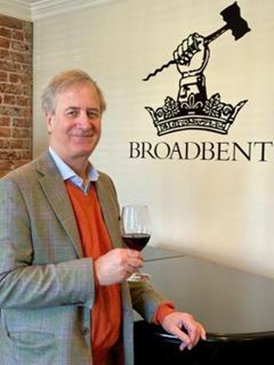
1. Please share some information about your life and how you wound up working in the Port trade, and at what age?
I grew up in the wine trade. My father was Michael Broadbent MW, founder of the Christie’s Wine Department in 1966, author of numerous wine books and columnist for Decanter magazine for 433 consecutive months. Every Easter holiday growing up was spent in Europe, visiting old wine cellars. We’d see what was in the cellars and pack them up for the Christie’s van to pick up. The very best wines came back with us in the boot of our car to be smuggled through customs destined for the auction. From the age of seven, I was drinking wine at home and exposed to the finest wines in the world.
My first trip to Porto and the Douro was probably around 1970, to stay with the Van Zeller family at Quinta do Noval. It was the summer, triflingly hot. They had a swimming pool and it felt a little uncomfortable with the peasant workers around us while we were enjoying playing in the water. The river was very wild, huge rapids, because the dams had not been built.
Working in wine was always part of my upbringing. I was enlisted to help my parents behind the Christie’s stand at the Bristol Wine Fair and other festivals. When I was 17, I worked in Paris that summer at Steven Spurrier’s Caves de la Madeleine. Many of my summer and winter holidays were spent in France on exchanges with wine families, such as at Paveille de Luze with the De Luze family, and Chateau d’Angludet with the Sichels. It was skiing exchanges in the winter.
When I was 18, during my gap year after leaving Milton Abbey School, where some Port families subsequently sent their children, I did a cooking course. Then I went to work for Hennessey in Cognac, as a tour guide and interpreter for VIP guests. We worked in the bottling line when we were not hosting tours and visitors. After that I worked at Harrod’s in the Wine Department for a winter. I then went to Australia to do two harvests, first at Rothbury Estate for Len Evans, then at Yalumba with the Hill Smith family. At Yalumba, I was tasked with helping make their “port”! I spent time traveling around wine regions with Marc Hugel, and it was his enthusiasm for wine tasting which brushed off on me and I called home to tell my parents that I wanted to go into the wine business.
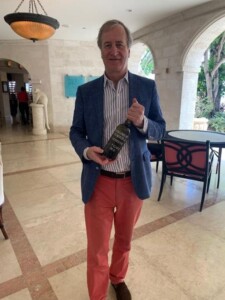
After backpacking around Australia for a few months, my father contacted me to let me know that there was an opening at the Harvey’s fine wine shop in Pall Mall [almost opposite where the 67 Pall Mall club is today]. Of course, under the Harvey’s label, we sold Ports, along with Cockburn’s which had their offices on the other side of the building. Ted Hale MW was my boss. He opened bottles every day for lunch. There was a wine bar nearby and, once, I went by myself for lunch and ordered a glass of Port to finish. They brought me a full pint of Port! I don’t remember going back to work that day.
By now, the thought of going to university had long passed. My social life was out of control, even dating a Royal! Harvey’s was at the heart of London’s club land. One day, one of our clients, Parry De Winton, a wine consultant and importer, came in after a boozy club lunch. We had the Director’s of Allied Breweries in the boardroom, so I had to keep Parry quiet. I gave him a glass of sherry and ushered him into the wine storage closet. I locked him in and every 20 minutes went to fill up his glass. After five glasses he said, “they’d like you in Canada”. It turned out that he was consulting for Schenley Canada Inc. which was a wine agent representing some of the greatest wine producers in the world. They had been looking for someone to intern and Parry suggested me.
I was offered a two-year job in Montreal. One month before my 21st birthday, I moved to Canada. Before going, they sent me to see all their most important European wine suppliers. I visited Sogrape in Porto, because Schenley represented Mateus Rose and Dão Grão Vasco, among others, including Dow’s Port. After a year in Montreal, Schenley transferred me to Toronto where I became one of their two wine consultants for Ontario. One of my jobs was to look after visiting suppliers. I am proud to be able to say that I launched Sassicaia in Canada and went out to Vancouver to launch Chateau Musar.
One of my achievements was to start a branch of L’Academie du Vin in Toronto for Steven Spurrier. He came out for the opening, and it is still operating in Toronto to this day.
I was offered two jobs in the USA by Schenley Suppliers. Patrick Baseden offered me a job as their Veuve Clicquot representative in Chicago. James Symington offered me a job to represent their Ports east of the Mississippi. I decided to go with James’s offer because, to be honest, I don’t like Champagne enough to spend every day selling it. There was so much more variety when it comes to Port that I decided to take the Symington job. I was 24 at the time.
I went to Porto and the Douro to be trained on the Symington Ports by Paul Symington. Of course, I already knew about Port and had even written about it as a wine columnist for a now defunct magazine called Wine Canada. But Paul was an incredible mentor and he prepared me well.
As it happens, two weeks before starting with the Symington family, their agent who was based in San Francisco, died of AIDS. The plans changed. Instead of representing the family in the Eastern part of the USA, I was told that I would be covering the whole country, and they asked me to set up Premium Port Wines for them. My very first job was to go to San Francisco to pick up the files from the late agent’s office. During the interview process for the Symington family, I had been to Portugal where I’d been introduced to him. After the eerie task of picking up his files I returned to Toronto. There I set up an office for Premium Port Wines, from which I had to work until my US work permit came through. When it came time to moving to the USA, I had the choice of being based in New York or San Francisco. I decided on San Francisco because I could set up the Premium Port Wines office sharing space in Sausalito with the Hill Smith family's company, Negotiants USA. NUSA represented Chateau Musar along with the Yalumba wines.
I ran Premium Port Wines, leaving them on December 31st 1995, a couple months shy of my 10-year anniversary. My job was to establish Premium Port Wines as their import company and set up national distribution for Graham’s, Dow’s, Smith Woodhouse, Tuke Holdsworth, Gould Campbell and Quarles Harris, then later, Quinta do Vesuvio. I was also representing Warre’s, which was imported by another company, Vineyard Brands, but soon realized that the more I did to make that brand succeed, the more pressure it put on me to grow the other brands for which my performance was being assessed. So, I stopped selling Warre’s.
The other part of my job was to teach Americans about Port wine. I am proud that all of the other Port Shippers credited me back then for building the Port market in the USA. I travelled around the country nonstop. My first business trip was for three weeks and, on one of those days, I flew to three different cities and did events in each one!
Americans did not know what Port is. There was a contingent of men in their 70s or older, who drank Port in stuffy clubs, but other than that, literally, nobody knew what Port was. To give you an example. I would go into stores in New York and try to sell them Port. They only sold domestic cheap ‘port’ in pint or half pint bottles to customers who would drink from them in the street, out of brown paper bags. They thought I was out of my mind trying to sell them a Ruby Port which they would have to sell for $6. It was a very hard sell.
In the early days of having a Port table at wine festivals, it would have been very unusual for anyone to have known what a Port is, let alone to have tasted any. I remember one occasion when someone came to me and asked me what I was pouring. When I told them it was Port and they asked what Port is, I told them that it was a sweet red fortified wine. He told me that he doesn’t like sweet wines and was about to walk away when I said, “this one is a dry Port”. He tasted it and loved it, not even registering that it was very sweet!
Over the next decade, I saw the business grow in yearly increments. I saw 60-year-old men start to drink it. Then it moved to men in their fifties. Then men in their forties. By the time men in their 30s started drinking Port I saw an interest growing among female consumers. I knew that Port had made it when I was doing a seminar for a group of women aged 21 to 32 called “The Spinsters of San Francisco”. With three hundred young women hanging onto my every word and tasting a bunch of Ports, it was one of the most memorable tastings of my life. This was just before Christmas and they almost all went out to buy Port as gifts.
Back then, I was doing Port trainings in restaurants. I persuaded restaurants to put Port on the front pages of wine lists so that it would plant the seed for ordering it at the end of the meal. In the UK, Port drinkers drank Ports after dinner or with Stilton cheese. It had to be at least 15 years old. In America, there were no set expectations or traditions. One of the most popular desserts in America is chocolate, which was not the case in the UK. So, I taught Americans to drink Port with chocolate and told them that a young Vintage Port was the best pairing with chocolate desserts. Subsequently, America became the biggest market for Vintage Port, and every good restaurant was offering several vintages by-the-glass. American Airlines became the single biggest customer for Vintage Port in the world. I sold them many thousands of cases of Graham’s Malvedos over the years.
I had to leave the Symington family after a rather unpleasant power struggle with someone I’d hired as a general manager for Premium Port Wines. For many years there was an uncomfortable relationship with me and the Symington family, but we are now good friends again, I am happy to say. It turned out to be a blessing in disguise because it was the impetus for me to start my own import company, Broadbent Selections.
As an aside, soon after I started working for the Symington family, they asked me if I thought I would be able to sell Madeira. Knowing the fabulous history between Madeira and America I answered, “of course!". They then bought the Madeira Wine Company. Madeira had almost been completely absent from the US market since Prohibition and my job in 1989 was to re-launch Madeira in America.
So, along with Port, the rest of my tenure was doing exactly the same as I did for Port, importing Madeira, setting up national distribution and teaching Americans about Madeira. I might add that this was three years before anyone else started importing Madeira [with the exception of one retailer in California] but that is a topic for another day.
When I left the Symingtons my goal was to start my own Port and Madeira company. In January of 1996, I set up Broadbent Port, Broadbent Madeira and Broadbent Selections. Broadbent Selections was the import company in America and soon after setting it up, other wineries from numerous regions around the world asked us to become their importer. We now represent about 45 brands. My parents were not involved in my businesses with the exception of me sending them to the island of Madeira to develop the blends for our own brands and to find old Madeiras, which we could buy and bottle as Broadbent wine.
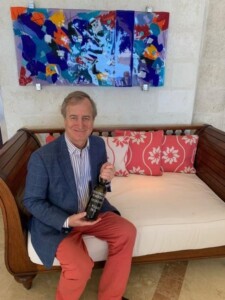
I had to create cash flow, so we became the importer for Ferreira, Offley and Quinta do Crasto. At this point, there wasn’t any table wine to speak of being produced in the Douro other than Barca Velha. We became the importer of Sogrape’s Douro wines and then came along Quinta do Crasto's. After a decade or so, we dropped Offley because it was too hard to sell parallel ranges of Port. Ferreira and Offley were competing with each other, both being owned by Sogrape. Though we were successful in building Ferreira and Quinta do Crasto, I do have some regrets. My company will turn 30 years old next year. If I had spent the past 30 years focusing on Broadbent Port, it would by now be a major brand. Instead, we always put the interests of Ferreira, Crasto [and Offley] before our own. Crasto eventually left us, luckily, we remain good friends, but I think they might regret their decision!
At Broadbent Port we’ve had a history of great winemakers. Dirk Niepoort, Luis Sotomayor (at Sogrape) and now Ricardo Nunes. The story of partnering with Churchill’s is a fun one.
After leaving the Symington family to start Broadbent Port, I approached several Port producers with the idea of them helping make my wine. Johnny Graham’s Churchill company was relatively new, having started, I think, in 1981. He offered to make our wine, and I really wanted to work with him but, initially, it would have had to be his wines with our own buyer’s own brand label, and he was not, then, able to supply older tawny Ports.
We made the decision to go with Dirk Niepoort because he could make Ports uniquely for our Broadbent brand and supply older wines. It worked well with Dirk and his team. They have made all of our Vintage Ports, except for the 2023, which we’ve just Declared. That was made by us with Johnny Graham and Ricardo Nunes. Dirk also made our Auction Reserve Port, but we never ended up making any tawny Port with him. I think the reason for this is that we also represented Ferreira and we didn’t want to upset them by competing with our own brand while their Duque de Bragança was a clear priority.
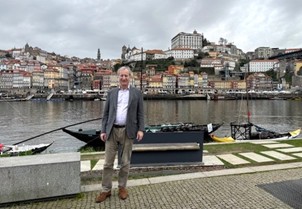
Sogrape approached us a few years ago and told us that they were consolidating all of their brands around the world to be distributed by their own companies. They own an import company in the USA called Evaton. They were very kind. They asked us how long we needed so that we could build up our business in preparation for us losing the Ferreira income. I asked for 9 months and they granted that. They understood that Ferreira was important to us so, in exchange for taking that business away from us, they offered to help us develop our own Broadbent Ports by expanding our range with the addition of tawnies, white, LBV etc. I might add that we are important to them because they make our Broadbent Vinho Verde and they are excellent partners. It also coincided with Dirk Niepoort retiring from the Port business and quitting drinking!
Sogrape is wonderful to work with, but there were two frustrations when it came to the Broadbent Ports. First, they couldn’t make us an affordable Vintage Port. Second, Sogrape as a company is geared towards large production. It was much too cumbersome to switch over bottling lines to bottle small batches of wine for Broadbent. As a result, we lost customers in some smaller markets because those clients couldn’t reach the minimum orders for our Ports to be labelled for them. I especially regret that we couldn’t fill an order for Denmark while we were making our Ports at Sogrape.
Sogrape had really wanted to help, but they recognized that building the Broadbent brand required small steps. Sogrape suggested that we talk to Churchill’s again. This was music to my ears because it was a full circle. Churchill was now a mature company, with older tawny Ports available and flexibility to do small bottling runs for smaller markets. Most importantly, they make spectacular wines and could also make unique blends for us, as in the days of Dirk. Whereas Sogrape would make minor adjustments to their own Ports so that we had unique wines, Churchill was able to work with us from scratch to help us produce our own wines, in their cellars.
2. What is your favorite style or category of Port to drink at home, and can you mention some of the most memorable Ports you have ever consumed, and why?
At home, I would normally drink a 20-year-old tawny Port. I do think that Ferreira’s Duque de Brangança and Niepoort’s old Colheitas are the best. However, when I have a dinner party, I always serve a Vintage Port. Never less than 20 years old. It is amazing how many bottles we end up drinking. Half a bottle per head, after many other wines, would be moderate for our parties. A magnum is always best when there are more than 6 people.
I have drunk a lot of great Ports. Noval Nacional is always great. The 1945s and 1927s I’ve always thought of as great but, surprisingly, I think the most perfect Port I ever had was a 1966 Gould Campbell when it was at its peak, at about 25 years of age. I have had it recently, but it isn’t the wine it was. It was truly memorably great in its day.
3. Besides those mentioned above, who are some Port producers that you most enjoy drinking, and please reveal a few emerging Port firms which have impressed you?
All Ports are good. I can’t say I favor any. It all depends on the Vintage. As far as inexpensive Reserve Ports, I don’t really drink those. We produce one called Auction Reserve. I like it because, being small production, we can claim that it is a step down from Vintage whereas the large production Reserve Ports tend to be a step up from Ruby. I always enjoy the unfiltered LBVs, particularly Smith Woodhouse. I do like to drink the white Ports too. I probably drink more of Ferreira’s Duque de Brangança 20-year-old tawny more than any other. I like their 10-year-old Quinta do Porto too. In England, growing up, we drank a lot of Graham’s 20-year tawny Port. Mostly, though, at home, I would drink Vintage Ports, but I particularly like Niepoort.
4. What brings you the most joy in what you do within the Port & Douro wine trade?
Education is what I enjoy most. I’m a performer and love to teach seminars on Port. I use my British sense of humour, but that doesn’t always go down well with people who have a limited sense of humour!
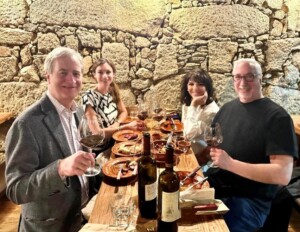
5. Would you please share one piece of unique trivia or historical information about your current company that would be new to FTLOP readers?
I don’t think it is known to FTLOP readers that Broadbent was the first to produce a Single Cask Madeira. We were not the first to export it, but Broadbent was the one which came up with the concept.
6. Which individual has been your greatest mentor and how have they inspired you?
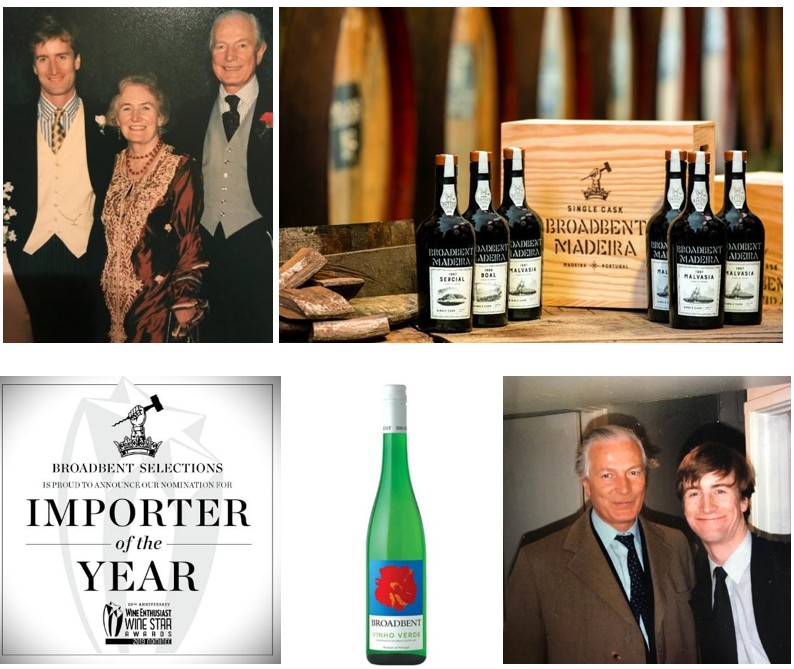
It is obvious that my father had a huge influence on me, as did my mother. My father was a renaissance man. He was a concert level pianist and organist and my love for music was developed when, as a child, I would fall asleep at night listening to him playing his piano. My appreciation for art influenced by his brilliance as a prolific artist, even exhibiting in the Royal Academy of Arts Summer Exhibition. I have, on my Bartholomew Broadbent Facebook page, a collection of more than 600 of his drawings in a Photo Album called Micheal Broadbent’s Art.
His love of being in the company of women was no secret and his sense of humour was incredibly naughty. Wine was a given. He would encourage us, insisting, that we taste every wine, even if we weren’t going to drink it, enabled me to know, from a very early age what a truly great wine was about. I was lucky that from the time I moved to North America in 1982, he would get me invited to almost every great tasting he attended in the US. These experiences of going to vertical tastings, such as Lloyd Flatt’s Chateau Margaux tasting with bottles dating back to 1784, were experiences which were very unique.
My mother’s great food and wine pairing abilities were certainly influential but probably the best thing she gave me was her sense of humour, and that she lived by the mantra that she’d “rather shock than bore”. I live by that too, but it sometimes gets me in trouble with the younger generations who lack humour. The Academie du Vin Wine Tasting Commemorative Edition has biographical chapters added to my father’s iconic book. I highly recommend ordering a copy because of the chapters written by Hugh Johnson, Jancis Robinson, Gerrard Basset, Steven Spurrier, Paul Bowker, Fritz Hatton, Jonathan Freeman-Attwood [about his music], Charles Marsden-Smedley [about his art], Leaf Arbuthnot [about being a grandfather] and, of course, me [about his sense of humour].
But the other great influence in my life was Serge Hochar, the late owner of Chateau Musar. He was like a second father to me. Like my father, he travelled constantly. He too had a mischievous sense of humour and a love of being in the company of women. He was a great philosopher and many of his philosophies influenced my thinking. His wine, not a perfect wine, was a wine of character, my favorite wine in the world. I first tasted his wine the same day that my father did, at the 1979 Bristol Wine Fair, and immediately declared it my favorite wine in the world. At that time, our house wines were 1961 Bordeaux as we’d moved on from the 1945 clarets. So, I knew what great wine tastes like, but Chateau Musar told me what gives wine a great character. I worked with Serge in Canada, then in the USA as we shared offices in California and then, finally, in about 1998 when he signed Broadbent Selections as his importer. We still represent his wine which is now managed by Serge’s son, Marc. But Serge’s passion, energy, drive, philosophy and quirkiness were as much an influence as any mentor could be.
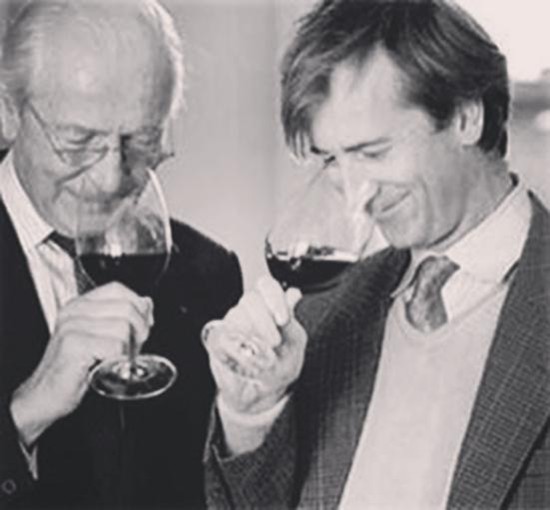
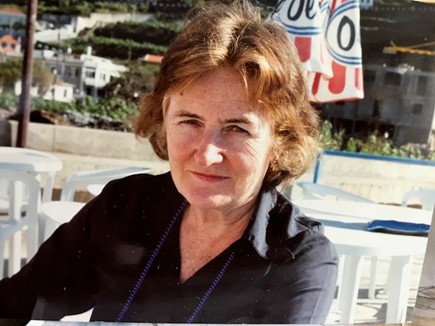
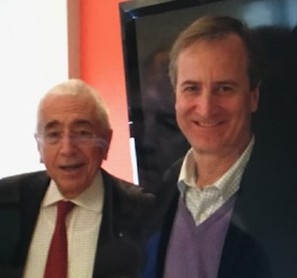
The Mentors of Bartholomew: Michael & Daphne Broadbent, and longtime friend, Serge Hochar
7. What is the greatest challenge facing the Port trade today? What about the Douro wine trade?
The biggest challenge facing the Port trade is the anti-alcohol movement. I was talking to a friend, Crispin Holborow, who lives in a beautiful stately home with a good wine cellar. He had a dinner party the other day. He decanted some lovely Ports and had some stunning clarets. Except for one couple who were staying the night, nobody had any Port because they were driving.
The other problem for Port is that table wines have increased in alcohol levels. In the 1980s all wine was around 12.5%, perhaps 13%. If two people share a bottle of wine at 12.5% alcohol, they will finish it and want a glass of Port after. If the wine is 14.5% or higher, two thirds of the way through a bottle and you are drunk. If you do want to have another drink, you just finish the bottle. Since about the late 1990s, I blame the decline of Port sales on the rise in alcohol levels of table wines.
8. Can you share one new project or improvement that your company is currently involved with?
The improvement is being able to ship smaller orders. Having always admired the Graham family who own Churchill’s, I always wanted to work with them, and it is a new development that we started to work with them in the past year. They are great partners because they are happy to receive our Broadbent Port visitors, and we have access to Quinta da Gricha for visitors who want to visit the Douro. Most importantly they partner with me in the winemaking. I will go over each year to blend our Ports with them and Churchill is happy for us to make our own unique wines in their Port Lodge, in Vila Nova de Gaia. I am very excited that we can now go back to smaller Port markets, and our minimum orders for our Ports are within reach of most importers.
9. What can the industry do to improve the promotion and education of Port wine and grow market share in the ever-evolving global beverage marketplace?
The key is to making Port a young person’s drink. We did it in the 1980s and 1990s; it can be done again. Hire a very dynamic attractive young person to do events for young people. Many of the Port Shippers have young adult sons and daughters who should be sent out into the world. They should be sent off to pioneer Port, promoting it, as if Mormons setting up a mission. If an attractive young man or woman in their 20s were to set up events for people in their 20s, it could have a great influence. The use of social media should be used too. Hire young people to make social media campaigns on TikTok and other platforms. Boring trade tastings won’t do anything. They’ve been tried and haven’t moved the needle.
10. What non-wine activities do you enjoy?
I love playing tennis. I play twice a week. I play a lot of backgammon too. I watch Netflix. I spend good times with my wife Spencer and my two children, and friends. I like to travel.
11. What is the future for Broadbent Port?
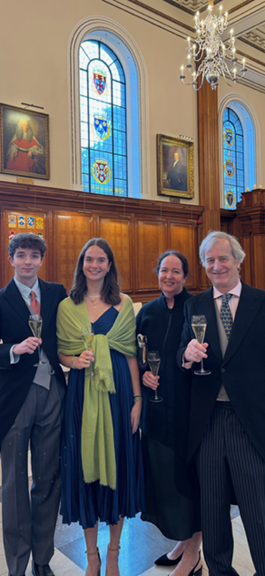
I am 63 years old. I’ve got a ton of energy and ambition, but I am realistic in knowing that my time is limited. I have twins who are 20 years old, college age, and they are both talking about an interest in the wine business. I hope they both go off and do something else first. My son is into music production and technology, my daughter is studying political science, international relations and environmental policy. I think I will know in about 8 years whether they decide that the wine business is a world they want to join.
They both love travel, meeting interesting people, dining out, drinking and everything else which this lifestyle career brings. Charlotte is very interested in making wine more sustainable etc. I would like them to take over Broadbent, but even if they don’t, I think they could find someone to manage the business for them. For me, it is an insurance policy because who knows what jobs will be able to sustain a lifestyle. I hope they don’t sell it for the sake of the future of their own kids!
One thing my father taught me was not to sell the family name.
Disney tried to buy the Broadbent name from him when they were big into wine production in California. He understood that once you’ve sold your name, you’ve sold your future. I hope my kids don’t sell it, but the Vinho Verde is a big business, and our California brand is rapidly growing too. It could be a temptation which I hope they can resist. What I’d love to envision is for them building on our Portuguese business. I’d love to see them acquire a Quinta in the Douro and a Lodge in Porto. I’d like to see them running a business in Portugal for generations which follow. I think Portugal will be a more desirable place to live than the USA, if for no other reason that they would get longer vacations. I am optimistic that one or both will end up in wine. I have a dream.
But all I care about is that they are happy.
Leave A Comment
You must be logged in to post a comment.