
Port Personalities In Focus is proud to introduce you to Pedro Carneiro. Port Personalities In Focus has become vital in our mission to introduce you to members of the Port and Portuguese wine trade. In Focus is included in every newsletter, intent on promoting people who are not typically in the media’s spotlight. In Focus brings you candid comments, personal perspectives, and an understanding of the people inside Portugal’s wine trade: from marketing professionals, master blenders, owners, importers, winemakers, and managing directors. You will meet individuals who work at small family-owned firms to the largest wine companies in Portugal. We hope you’ll enjoy reading about the people who grace these pages.
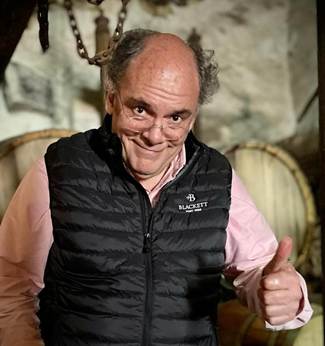
1. Please share some information about your life and how you wound up working in the Port trade, and at what age?
I am Portuguese and was born in Angola. After our revolution in 1974, I came to Portugal and my parents decided to live in the centre of Vila Nova de Gaia. During the night, my nose discovered the scent of the Port Wine lodges, which were nearby. That scent lives in my memory since then.
Anyway, I graduated with an Economics degree, from Porto University in 1985 and 5 years later, I took a post-graduate course in Lisbon on Information Systems Management in 2001. My professional career began in the textile and leather industry, my first river Valley, the Ave River Textile Valley and it was always focused on the business management point of view.
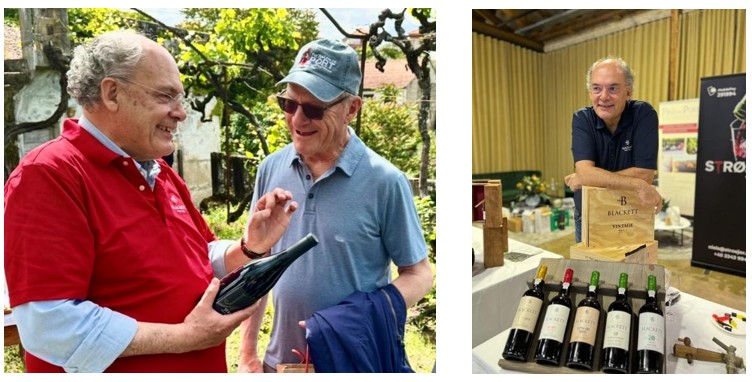
The return of the scent of Port occurred in the beginning of 2002, when I worked with the Niepoort’s for nearly 4 years, where the financial and cost accounting issues of the company were under my responsibility. At that time the central offices were at the building close to the Factory House. Concurrently, I began working with the Mesquita brothers, owners of the Brunheda wines and vineyards, where I am now a partner, accountable for the management of the Blackett Ports project.
So, with 40 years of age I went to my second valley, the Douro Valley.
Thinking of our life’s story, when we look back deep into our own past, with our actual knowledge, it is amusing. We have met people in our lifetime from the past, we had with them a lot of normal talks without having an idea of their relevance within the Port and Douro wine business.
Just one or two things of curiosity. João Nicolau de Almeida and, at that time, with all his young children, coincidentally they were my upstairs neighbours when I came to live in Porto. During that period of time, João was a fantastic condominium administrator, and while I played for the rugby team of Economia do Porto, I played with Luis Sottomayor as right wing and António Marquez Filipe as the blindside flanker on the same team.
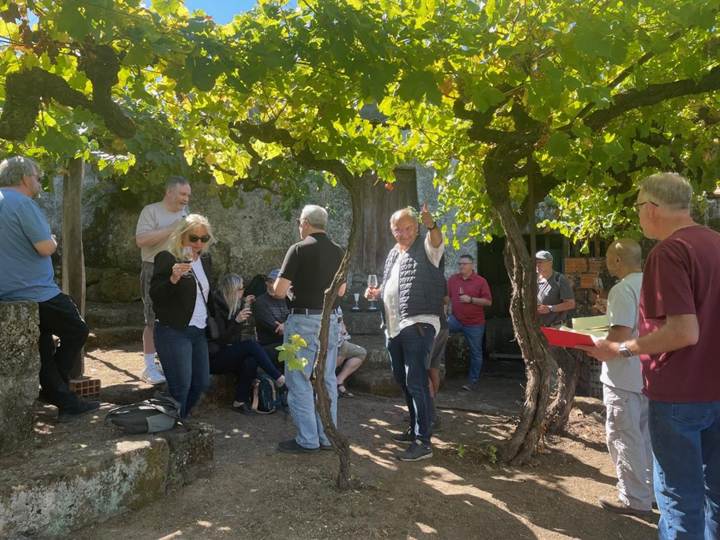
2. What is your favorite style or category of Port to drink at home, and can you mention some of the most memorable Ports you have ever consumed, and why?
Maybe because I was a late entrant into the wine business, the focus on the product itself was not one of my primary concerns. But in this business, we use our product with our meals and at almost any time of the day. And that was for me a very interesting experience especially when I realised, I was, literally seated in one of the oldest of Port’s secret spots in the Douro Valley – known as Brunheda. The wood-aged style is my preference, as in both reds and also white Ports. Also in my opinion, or saying it in other way, I like a middle-aged Tawny or White Port when I can find better balance and the beauty of when they reach their developed ages, like a 20 or a 30-year-old Tawny.
3. Besides those mentioned above, who are some Port producers that you most enjoy drinking, and please reveal a few emerging Port firms which have impressed you?
I like Ports produced by Andresen, Prelada, Lamelas, Dalva, or Kopke Colheitas. All Ports need to have a face, and in the end that also contributes to my personal preferences.
Nowadays, I am fascinated with Vintage Ports from Fonseca and Graham’s, from the 1970s.
4. What brings you the most joy in what you do within the Port & Douro wine trade?
The Port wine trade is starting to be a trade for serious Port wine lovers. There may be less overall quantity of consumers, but now the passion for Port amongst enthusiasts, brings a more sophisticated level of Port lovers to the marketplace. It is a pleasure to be in this kind of industry. The goal of keeping a healthy business running at the same time is becoming increasingly difficult. However, it may only be possible if you fall in love with it.
5. Would you please share one piece of unique trivia or historical information about your current company that would be new to FTLOP readers?
We went deep in Port history to find a name for our brand. Blackett was a family name of George Blackett, born in the city of Leeds, UK. His business was established in Porto in the nineteenth century as a merchant of Port wines. Lack of successors brought the company to an end. The funny thing was the link that we never imagined that existed between George Blackett and Brunheda’s old Ports from the late XIX century. The importance of the Ports of Brunheda, for the trade at that time, was one of the key reasons for the construction of the railway line of the Tua River, which reached all the way to the Brunheda property, in 1887.
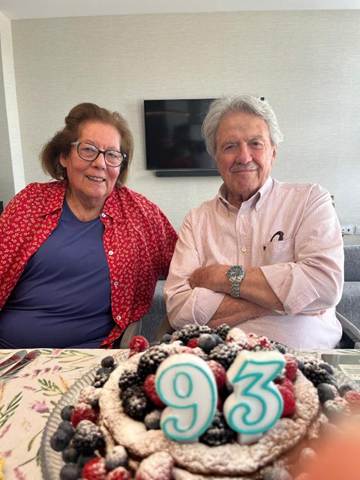
My Parents
6. Which individual has been your greatest mentor and how have they inspired you?
My greatest mentor is my father. That means a lot to me, and it needs to also be, for every family. He always encouraged me to “take risks” in my life and also in business. The Portuguese people that were forced to return to Portugal from the colonies in 1974/1975 and restart a new life, achieved great success in a wide variety of businesses, and brought a new mindset to Portugal at that time, post-Revolution. In the Port industry, the first important person I met was Rolf Niepoort. Visiting and counting the several wines stored in the old Serpa Pinto Port lodge, was so fascinating and incredibly unbelievable. Back in those days, I realized that the wines that were aging in cask greatly increased in value during their years in wood. The quality of those special Ports needed to be carefully looked after, taken care of and treasured.
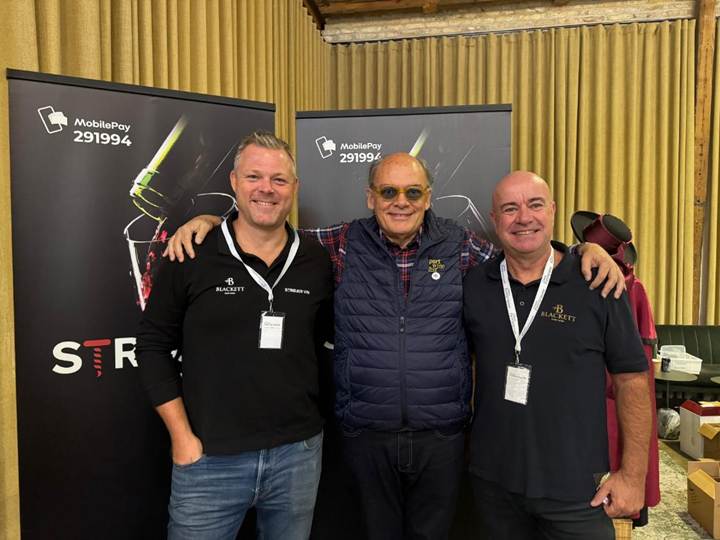
Along with my colleagues.
7. What is the greatest challenge facing the Port trade today? What about the Douro wine trade?
The greatest challenge that the Port trade is facing today, is to manage the way that Port producers must deal with consistent losses from their sales, especially within the entry level categories of Port, which translate to huge sales volumes.
The increasing growth of Port’s Special Categories will not be enough to support the losses of the high sales volumes of these more basic levels of Ports, like basic Ruby and Tawny Ports.
Wine tourism is an interesting component of how we can now capture greater value from the trade. But also, within this fairly recent increase in tourism, large investments are being made by the Port companies, and that also requires a solid return on their investments, to be realized.
Aging wines in casks in a careful way, will require more resources invested both in increased capacity, and in the individuals who will be responsible for taking care of them.
The need to increase the price to equal the ever-increasing value of wood-aged Ports will be extremely important and necessary, in the immediate future.
We need to always remember that when we drink a bottle of an old wood-aged Port wine, there is an associated replacement cost, and time required to have another bottle achieve the same level of quality.
Wines produced in the Douro Valley, it matters not if they are Ports or Douro wines, as they both have the same vine costs, and roughly the same vinery costs to produce. Both costs are high when compared with almost any other wine region. Changing from one product category to another in a general decreasing scenario of sales … is a lose-lose situation. High production volumes, at such expensive costs, needs to be stopped. Differentiation demands giving a way of mass volumes.
For example, it is as impossible to make only Reservas or Grande Reserva Douro wines, as it is to make only Very Old, or Very Very Old Ports every year. It is simply not a sustainable formula for success. Producing massive quantities of basic Ruby and Tawny … a net fail.

Maria and children
8. Can you share one new project or improvement that your company is currently involved with?
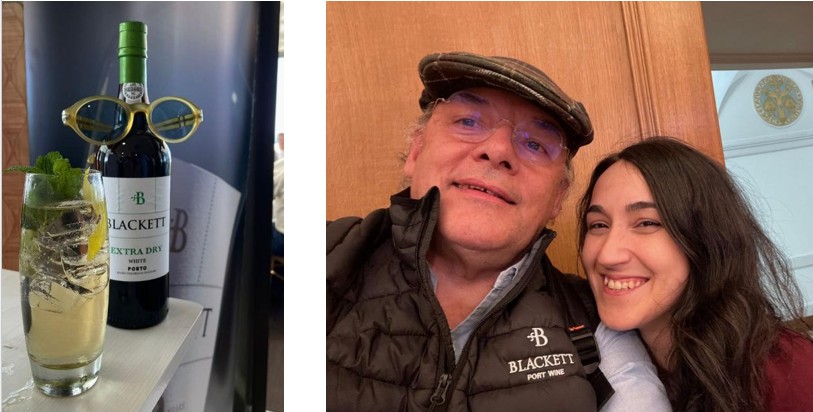
The Blackett brand works mainly with wines from Brunheda’s exceptional wine stocks, that have been aged slowly and naturally.
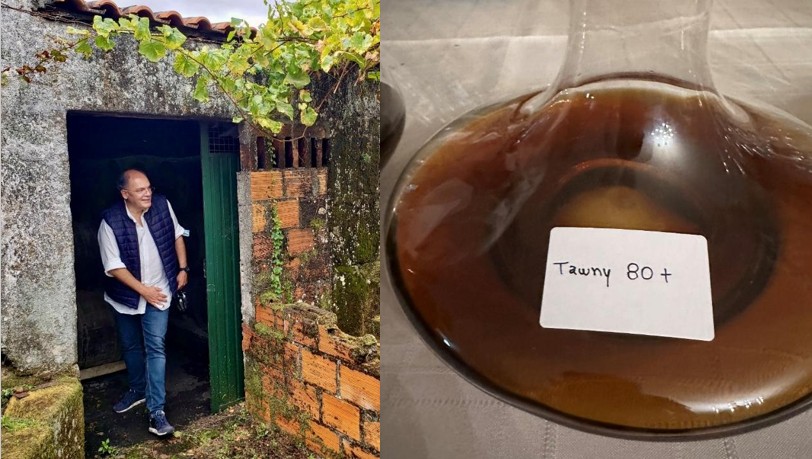
We have a plan to increase our range of wood-aged Ports in a consistent manner. Beginning in 2026, with our Blackett Tawny Ports, we plan to launch an 80-Year-Old Tawny, skipping the 50-Year-Old category, as we have decided to keep the 40+ Year Old blend. Regarding aged White Ports, we will add a new 30-Year-Old White Port blend, also in the coming year.
9. What can the industry do to improve the promotion and education of Port wine and grow market share in the ever-evolving global beverage marketplace?
When we talk about improving sales, we must insure that also equates to improvement of the profitability. We can either improve sales by increasing the unit value on a per liter basis; or purely by increasing the quantity of units sold.
Education, Education, Education, explore the value that Port enthusiasts can bring to the industry, and how we can increase the amount of money that visitors spend while visiting Porto/Gaia and the Douro Valley.
Invest in promoting our products to the younger generations, plus to new and emerging markets such as South Korea, India and African nations.
But my biggest concern is that the strategy of the large Port firms is different, sometimes, incompatible, with the strategy of the small Port companies. Also, the same applies … if we want to improve the sales per unit value, or volume.
Regarding the share of the wine industry as compared with beer or spirts, we need to invest more in Asian, African American, or Latino populations as they continue to increase in the world, while at the same time the European population is decreasing. The population groups which are increasing, are the same ones who currently consume less wine products.
The world’s wine community needs to stop competing against one another’s wine regions, and instead should intensify the focus on how we can all increase the consumer’s level of wine consumption, together as a global force, instead of other adult beverage categories.
10. What non-wine activities do you enjoy?
I like music, especially techno and Latino dance music. My biggest madness was to go to Tomorrowland 2017, in Belgium. I love DJ-ing and I keep an eclectic playlist for all occasions.
Leave A Comment
You must be logged in to post a comment.